
Choosing the Perfect Stand for Your Custom Aquarium

Setting up a custom aquarium is an exciting project that brings a slice of underwater beauty into your home. Yet, one crucial element often overlooked is the stand that supports your aquarium. The right stand not only holds the tank securely but also enhances the overall aesthetic and functionality of your setup. Choosing the wrong stand can lead to safety risks, damage to your aquarium, or a mismatch with your interior design. This guide will help you select the perfect stand for your custom aquarium by focusing on key factors such as strength, material, style, and storage needs.

Understand the Weight and Size Requirements
The most important consideration when choosing an aquarium stand is its ability to support the weight of your tank. Water is heavy: one gallon weighs about 8.34 pounds (3.78 kg). For example, a 50-gallon aquarium will weigh over 400 pounds when filled, including the weight of the tank, substrate, decorations, and equipment.
Calculate total weight: Add the weight of the empty tank, water, substrate, and decorations.
Check manufacturer specifications: Ensure the stand can support at least 25% more than the total weight for safety.
Consider floor strength: Make sure your floor can handle the combined weight of the aquarium and stand.
Ignoring these factors can lead to structural failure or damage to your home. Custom aquariums often have unique dimensions, so a custom-built stand might be necessary to meet these requirements.
Choose the Right Material for Durability and Style
Aquarium stands come in various materials, each with pros and cons related to durability, water resistance, and appearance.
Wood: Offers a classic look and can be customized easily. Solid hardwood or marine plywood with waterproof finishes works best. Avoid untreated wood that can warp or rot.
Metal: Steel or aluminum stands are strong and modern but may require powder coating to resist rust.
Plastic or Composite: Lightweight and water-resistant but may lack the strength for large tanks.
Combination: Some stands combine metal frames with wooden panels for strength and style.
For custom aquariums, wood often provides the best balance of strength and aesthetics, especially when finished with waterproof sealants. Choose a material that complements your room’s decor and can withstand occasional water splashes.
Consider Storage and Accessibility
Many aquarium stands double as storage units, providing space for equipment like filters, food, and maintenance tools. Think about how much storage you need and how accessible it should be.
Open shelves: Easy access but less protection from dust and water.
Cabinets with doors: Keep equipment hidden and protected.
Drawers: Useful for organizing smaller items.
Custom compartments: Designed to fit specific equipment or supplies.
If your custom aquarium has unique equipment needs, a custom stand with tailored storage solutions can keep your setup neat and efficient.
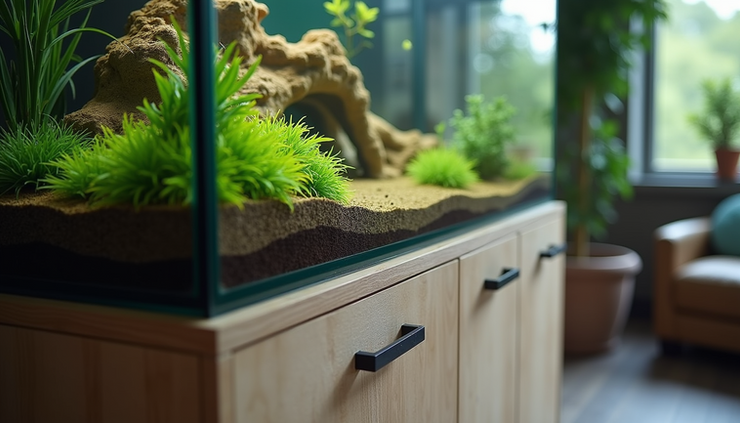
Match the Stand to Your Aquarium Style and Room Decor
The stand should complement both your aquarium and the room where it sits. Consider the following:
Color and finish: Match or contrast with your aquarium frame and room furniture.
Height: Choose a height that allows comfortable viewing and maintenance.
Design style: Modern, rustic, minimalist, or traditional styles can influence your choice.
Shape and size: Custom aquariums may have unusual shapes requiring specially designed stands.
A well-chosen stand enhances the visual impact of your aquarium and integrates it seamlessly into your living space.
Ensure Stability and Leveling
A stand must provide a stable, level surface to prevent stress on the aquarium glass and seals. Uneven stands can cause leaks or cracks over time.
Use adjustable feet or shims: These help level the stand on uneven floors.
Check for wobbling: The stand should not rock or shift when touched.
Reinforce corners and joints: Strong connections improve stability.
If you opt for a custom-built stand, ask the builder about reinforcements and leveling features.


Comments