
Essential Tips for a Successful Weekly Maintenance Routine in Your Planted Aquarium

Keeping a planted aquarium healthy and thriving requires regular care. Without a consistent maintenance routine, plants can suffer, algae may take over, and fish might become stressed. A weekly maintenance schedule helps maintain water quality, supports plant growth, and keeps your aquarium looking its best. This guide shares practical steps to build a simple but effective weekly routine that fits any planted tank.

Check Water Parameters and Adjust as Needed
Water quality is the foundation of a healthy planted aquarium. Each week, test key parameters such as:
pH level: Most aquatic plants thrive between 6.5 and 7.5.
Ammonia and nitrite: These should always be at zero to avoid toxicity.
Nitrate: Keep below 20 ppm to prevent algae growth.
Carbon dioxide (CO2): If you use CO2 injection, ensure levels are stable.
Use reliable test kits and record your results to track trends. If any values are off, take corrective action such as adjusting CO2, changing water, or modifying feeding.
Perform a Partial Water Change
Replacing 20-30% of the tank water weekly removes excess nutrients and waste that can harm plants and fish. Use a siphon to vacuum the substrate gently, removing debris without disturbing plant roots. Always use dechlorinated water at the same temperature as the tank to avoid shocking inhabitants.
Water changes help:
Reduce nitrate buildup
Remove dissolved organic compounds
Improve oxygen levels
Regular partial water changes keep the environment stable and support plant health.
Prune and Trim Plants Regularly
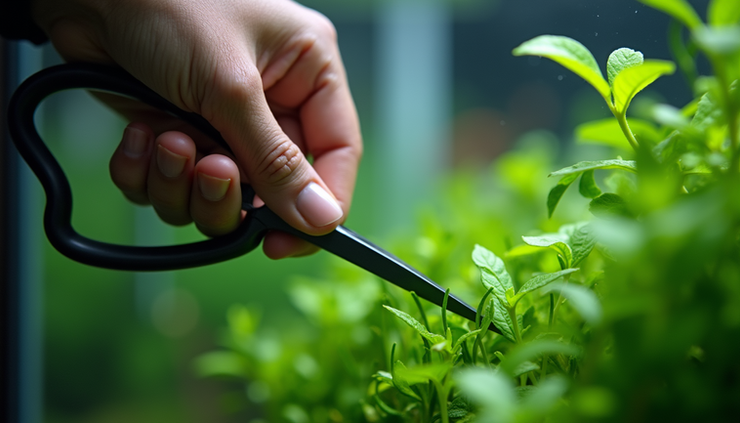
Weekly pruning encourages healthy growth and prevents overcrowding. Remove dead or yellowing leaves to improve water flow and light penetration. Trim fast-growing species to maintain shape and prevent shading slower plants.
Use sharp scissors or aquascaping tools to make clean cuts. Avoid removing more than 25% of a plant at once to reduce stress. You can propagate trimmed stems by replanting them, which helps expand your aquascape.
Clean Aquarium Glass and Equipment
Algae buildup on glass reduces light reaching plants. Use an algae scraper or magnetic cleaner to wipe the inside surfaces gently. Avoid abrasive tools that can scratch the glass.
Check filters, pumps, and CO2 diffusers for clogs or damage. Rinse filter media in tank water (not tap water) to preserve beneficial bacteria. Clean equipment ensures efficient operation and stable water conditions.
Monitor Fish Health and Behavior
Healthy fish contribute to a balanced aquarium ecosystem. Observe your fish weekly for signs of stress or disease such as:
Unusual swimming patterns
Loss of appetite
Visible spots or lesions
Healthy fish help control algae and contribute nutrients through waste that plants use. If you notice any issues, isolate affected fish and research appropriate treatments.
Manage Lighting and Fertilization
Plants need consistent light and nutrients to grow well. Check your lighting schedule and adjust if necessary to provide 8-10 hours of light daily. Too much light can cause algae, while too little slows plant growth.
Use liquid or substrate fertilizers according to your plant species and tank size. Weekly dosing keeps nutrients balanced. Avoid over-fertilizing, which can lead to algae blooms.

Keep a Maintenance Log
Recording your weekly tasks and observations helps identify patterns and troubleshoot problems. Note water parameters, plant growth, fish behavior, and any changes made. Over time, this log becomes a valuable reference to improve your routine.


Comments