
Top Hardscape Materials to Elevate Your Planted Aquascapes

Creating a planted aquascape that captures attention and thrives requires more than just healthy plants and clean water. The hardscape materials you choose form the backbone of your design, shaping the layout and influencing the overall aesthetic. Selecting the right stones, woods, and substrates can transform a simple tank into a stunning underwater garden. This post explores the best hardscape materials to help you build planted aquascapes that stand out.

Stones That Bring Structure and Contrast
Stones are the most common hardscape element in aquascaping. They provide structure, create focal points, and contrast beautifully with lush greenery.
Seiryu Stone
Known for its striking blue-gray color and white veins, Seiryu stone adds a rugged, natural look. Its sharp edges and textured surface create dramatic rock formations that mimic mountain landscapes. Seiryu stone is slightly alkaline, so it can raise water hardness, which suits many freshwater plants.
Dragon Stone (Ohko Stone)
Dragon stone features a warm brown tone with intricate holes and crevices. Its porous texture offers excellent surfaces for beneficial bacteria and mosses to grow. This stone is softer and less alkaline than Seiryu, making it versatile for various aquascape styles.
Lava Rock
Lightweight and porous, lava rock is perfect for creating caves and hiding spots. Its rough texture contrasts nicely with smooth plants and substrate. Lava rock is chemically inert, so it won’t affect water parameters.
When arranging stones, consider the golden ratio or rule of thirds to create natural, balanced compositions. Group stones in odd numbers and vary their sizes for a more organic feel.
Wood That Adds Warmth and Natural Flow
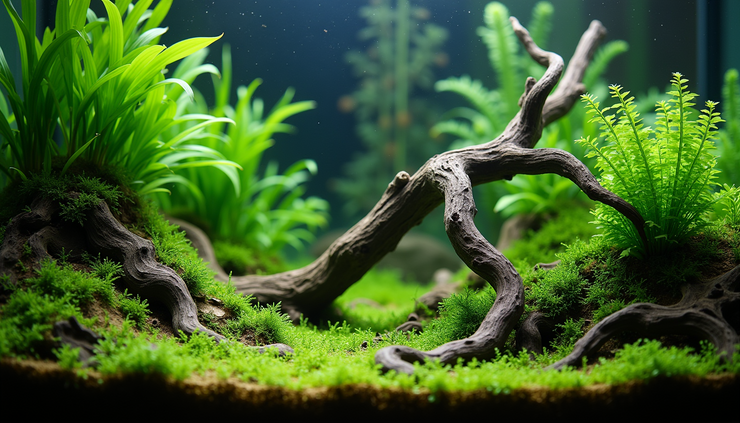
Wood is another essential hardscape material that adds warmth and a sense of movement to planted aquascapes. It also provides surfaces for plants like Anubias, Java fern, and mosses to attach.
Driftwood
Driftwood comes in many shapes and sizes, from twisted branches to smooth logs. It slowly releases tannins, which tint the water slightly brown but also have antibacterial properties. Soaking and boiling driftwood before use helps reduce tannin release and removes impurities.
Manzanita Wood
This hardwood has a striking reddish-brown color and intricate branching patterns. It is dense and durable, making it a favorite for creating tree-like structures underwater.
Spider Wood
Spider wood features thin, twisting branches that create a delicate, web-like appearance. It works well in smaller tanks or as a secondary hardscape element to complement stones.
Wood pieces should be securely anchored to prevent floating. Combining wood with stones can create dynamic contrasts between hard and soft textures.
Substrates That Support Plant Growth and Design
The substrate is the foundation of your aquascape. It affects plant health, root development, and the overall look of the tank.
Aquasoil
Aquasoil is a nutrient-rich substrate designed specifically for planted tanks. It provides essential minerals and maintains stable water parameters. Popular brands include ADA Aqua Soil Amazonia and Fluval Stratum. Aquasoil comes in dark colors that enhance plant colors and hide debris.
Sand
Fine sand creates a smooth, clean look and works well for foreground areas. It is inert and does not provide nutrients, so it’s best combined with root tabs or nutrient-rich layers beneath.
Gravel
Gravel offers good water flow and root anchoring. It comes in various sizes and colors, allowing customization of the tank’s appearance. Like sand, gravel usually requires supplemental fertilization.
Layering substrates can improve plant growth and visual depth. For example, place aquasoil at the bottom and cover it with a thin layer of sand or fine gravel for a natural look.
Combining Materials for a Balanced Aquascape
The best aquascapes use a mix of hardscape materials to create depth, contrast, and interest. Here are some tips:
Use stones as the main structural element, placing them off-center to avoid symmetry.
Add driftwood or spider wood to introduce curves and soften the hard edges of rocks.
Choose a substrate that supports your plant species and complements the hardscape colors.
Attach epiphytic plants like Anubias and Java fern to wood or stones to add layers and texture.
Keep scale in mind: large stones and wood pieces suit bigger tanks, while smaller elements work better in nano aquariums.


Comments