
Ultimate Guide to the Best Tank Setup for Discus Fish

Discus fish are among the most stunning and sought-after freshwater aquarium species. Their vibrant colors and graceful movements make them a favorite for many aquarists. However, keeping discus fish healthy and happy requires more than just a tank and water. They need a carefully planned environment that mimics their natural habitat. This guide will walk you through the best tank setup for discus fish, covering everything from tank size to water conditions and decorations.

Choosing the Right Tank Size
Discus fish grow quite large compared to many other tropical fish, reaching up to 8-10 inches in diameter. They also prefer to swim in groups, so space is crucial.
Minimum tank size: A 50-gallon tank is the smallest recommended for a small group of 5-6 discus fish.
Ideal tank size: A 75 to 100-gallon tank offers more swimming space and better water stability.
Shape: A tall tank is preferable because discus fish tend to swim vertically and appreciate depth.
A larger tank helps maintain stable water parameters, which is critical for discus health. It also reduces stress by providing enough room for each fish to establish its territory.
Water Conditions for Discus Fish
Discus fish come from the slow-moving waters of the Amazon basin, where water is soft, warm, and slightly acidic. Replicating these conditions is key to their well-being.
Temperature: Keep the water between 82°F and 86°F (28°C to 30°C). Discus thrive in warmer water than many other tropical fish.
pH level: Aim for a pH between 6.0 and 7.0. Slightly acidic water mimics their natural environment.
Water hardness: Soft water with a general hardness (GH) of 1-4 dGH is ideal.
Filtration: Use a high-quality filter that provides gentle water flow. Discus prefer calm water, so avoid strong currents.
Water changes: Perform weekly water changes of 25-50% to keep the water clean and parameters stable.
Regular testing of water parameters is essential. Discus fish are sensitive to sudden changes, so gradual adjustments are better.
Substrate and Decorations
The tank’s substrate and decorations should create a natural, comfortable environment without overcrowding the space.
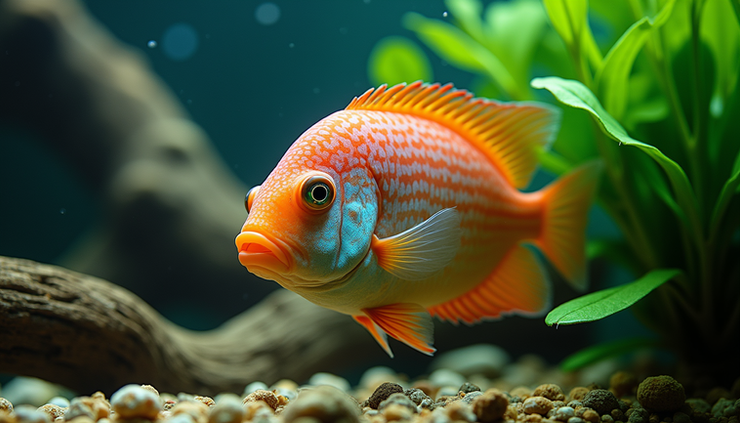
Substrate: Fine sand or smooth gravel works best. Sand mimics the riverbed and is gentle on discus fish.
Plants: Live plants like Amazon swords, Java fern, and Anubias provide hiding spots and improve water quality.
Driftwood: Adding driftwood creates shaded areas and releases tannins that slightly acidify the water.
Rocks: Smooth river rocks can add to the natural look but avoid sharp edges.
Avoid overcrowding the tank with decorations. Discus fish need open swimming areas as well as places to retreat.
Lighting and Tank Maintenance
Lighting should be moderate to low, replicating the shaded waters of the Amazon.
Lighting: Use LED lights with adjustable intensity. Too bright lighting can stress discus fish.
Photoperiod: Maintain 8-10 hours of light daily to support plant growth and fish health.
Maintenance: Clean the tank regularly, but avoid disturbing the fish too much. Remove uneaten food and debris promptly.
Good maintenance helps prevent diseases and keeps the tank environment stable.
Tank Mates for Discus Fish
Discus fish are peaceful but can be shy and stressed by aggressive tank mates. Choose companions carefully.
Suitable tank mates: Cardinal tetras, rummy nose tetras, Corydoras catfish, and small peaceful plecos.
Avoid: Aggressive or fast-moving fish that may outcompete discus for food or cause stress.
Group size: Keep discus in groups of at least 5 to encourage natural behavior and reduce stress.
Compatibility is essential to maintain a calm and healthy community tank.

Feeding and Nutrition
Discus fish require a varied diet to stay healthy and maintain their vibrant colors.
Diet: Include high-quality flakes or pellets designed for discus, frozen or live foods like bloodworms, brine shrimp, and beef heart.
Feeding frequency: Feed small amounts 2-3 times daily to prevent overfeeding and water pollution.
Supplements: Occasionally add vitamins or color-enhancing foods to support health and coloration.
A balanced diet supports growth, immunity, and overall vitality.


Comments