
Mastering the Art of Aquatic Plant Propagation for Stunning Aquascapes

Creating a lush aquascape filled with vibrant aquatic plants is a rewarding challenge for any aquarium enthusiast. One of the most effective ways to build and maintain such an underwater garden is through plant propagation. Propagating aquatic plants not only saves money but also allows you to customize your aquascape with healthy, thriving greenery. This guide explains practical methods to propagate aquatic plants and offers tips to help you achieve a flourishing aquascape.

Understanding Aquatic Plant Propagation
Propagation means creating new plants from existing ones. In aquascaping, propagation helps you multiply your favorite species, replace damaged plants, and fill empty spaces in your tank. Most aquatic plants propagate through one of three methods:
Cuttings: Taking a part of the plant, such as a stem or leaf, and encouraging it to grow roots.
Division: Separating a mature plant into smaller sections, each capable of growing independently.
Runners and Plantlets: Using natural offshoots or baby plants that grow from the parent plant.
Knowing which method suits your plant species is key to success.
Propagating Stem Plants by Cuttings
Stem plants like Rotala, Ludwigia, and Hygrophila are among the easiest to propagate. Here’s how to do it:
Select a healthy stem: Choose a stem with several leaves and no signs of disease.
Cut below a node: Use sharp scissors to cut the stem just below a leaf node. Nodes are where roots often develop.
Remove lower leaves: Strip off leaves from the bottom 2-3 inches to prevent decay underwater.
Plant the cutting: Insert the bare stem section into the substrate or let it float until roots form.
Provide proper conditions: Ensure good lighting, stable temperature, and nutrients to encourage root growth.
Within 1-2 weeks, roots should appear, and the cutting will start growing into a new plant.
Dividing Rooted Plants
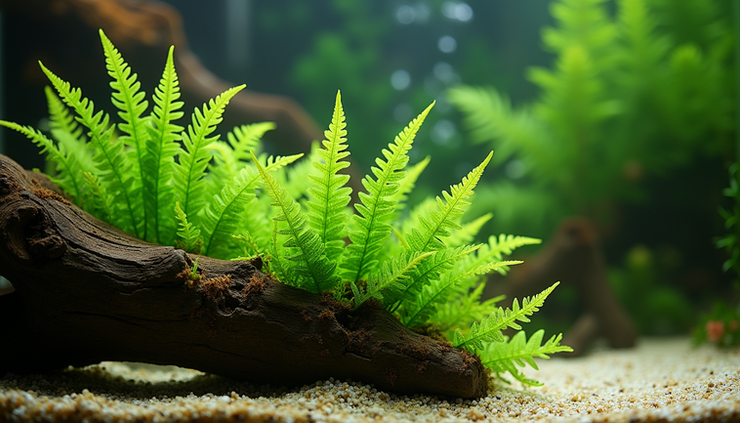
Some aquatic plants grow in clumps or have rhizomes, making division the best propagation method. Examples include Anubias, Cryptocoryne, and Java Fern.
Remove the plant carefully: Gently take the plant out of the substrate or off decorations.
Separate the rhizomes or root clumps: Use a clean knife or scissors to cut the plant into smaller sections, each with roots and leaves.
Replant the divisions: Place each section back into the substrate or attach to rocks or driftwood.
Maintain stable conditions: Keep water parameters steady to reduce stress on the divided plants.
Dividing plants helps rejuvenate older specimens and increases your plant stock quickly.
Using Runners and Plantlets for Propagation
Some plants naturally produce runners or plantlets that can be separated and grown independently. Amazon Sword, Vallisneria, and Dwarf Sagittaria are common examples.
Identify runners or plantlets: Look for small plants connected to the parent by thin stems.
Wait for roots to develop: Ensure the new plantlets have visible roots before separation.
Cut the runner: Use scissors to detach the plantlet from the parent.
Plant the new growth: Place the plantlet in the substrate where it can establish itself.
Monitor growth: Keep an eye on the new plants to ensure they adapt well.
This method is low effort and produces multiple new plants over time.
Tips for Successful Aquatic Plant Propagation
Use clean tools: Sterilize scissors and knives to prevent infections.
Maintain water quality: Stable pH, temperature, and low nitrates support healthy growth.
Provide adequate light: Most aquatic plants need moderate to high light for propagation.
Add nutrients: Use root tabs or liquid fertilizers to supply essential minerals.
Be patient: Rooting and growth take time; avoid disturbing cuttings too often.
Common Challenges and How to Overcome Them
Algae growth on cuttings: Reduce light intensity and improve water circulation.
Cuttings rotting before rooting: Remove lower leaves and avoid burying stems too deep.
Slow growth after division: Check water parameters and consider adding CO2 supplementation.
By addressing these issues early, you can improve your success rate.



Comments